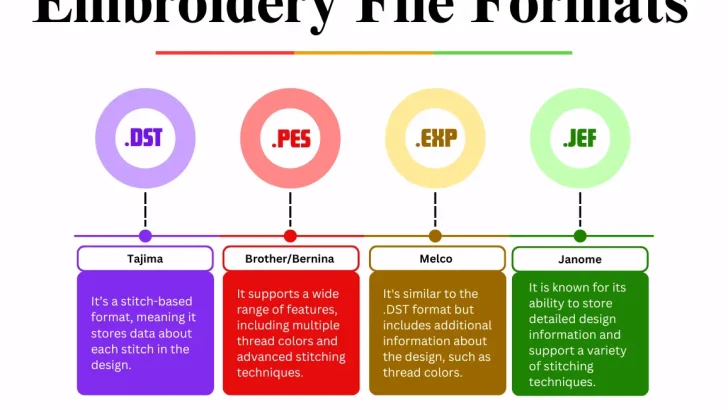
How to Choose the Best Embroidery File Format for Your Projects is a crucial decision that can significantly impact the quality and efficiency of your embroidery work. Whether you are a professional embroiderer or a hobbyist, understanding the different file formats available and their specific uses will help you achieve the best results. Each format has its advantages and limitations, so it’s essential to evaluate your needs before selecting one.
Understanding Common Embroidery File Formats
There are several embroidery file formats commonly used in the industry, each with its own purpose and compatibility. The most widely recognized ones include DST, PES, JEF, and HUS. These formats are developed by different embroidery machine manufacturers and are often associated with specific brands. For example, DST files are primarily used with Brother embroidery machines, while PES files are compatible with Janome and other popular brands. JEF files are commonly used with BabyLock machines, and HUS files are associated with Husqvarna Viking machines. Understanding these associations helps ensure that your design will be recognized and executed correctly on your machine.
Evaluating Compatibility and Software Support
One of the key factors to consider when choosing an embroidery file format is the compatibility with your embroidery software and machine. Not all software programs support every file type, and some may require conversion tools to open or edit designs. For instance, if you use a specific embroidery software like Wilcom or Hatch, it’s important to check which file formats it supports. Some programs may only support certain formats natively, while others offer broader compatibility through plugins or conversion features. Additionally, if you plan to share your designs with others, ensuring that they can access the file format is essential for collaboration and sharing.
Considering Design Complexity and Quality
The complexity of your design also plays a significant role in determining the best file format. Simple designs with fewer stitches may work well with most formats, but intricate designs with multiple colors and detailed elements may require a format that supports advanced features. For example, some file formats allow for more precise control over stitch direction, density, and color changes, which can enhance the overall appearance of the final product. If you’re working on a high-end project that requires precision and detail, choosing a format that supports these features will make a noticeable difference in the outcome.
Exploring Free vs. Paid File Formats
Another consideration is whether you are using free or paid embroidery file formats. Many online marketplaces offer free embroidery designs, but these may come with limitations in terms of quality, resolution, and customization options. On the other hand, paid formats often provide higher-quality designs with more flexibility for editing and personalization. It’s also worth noting that some file formats may be protected by copyright, meaning you need proper licensing to use them commercially. Always review the terms of use for any design you download to avoid legal issues.
Tips for Selecting the Right Format
To make the process of choosing the best embroidery file format easier, consider the following tips:
- Check your machine’s requirements: Ensure that the format you choose is supported by your embroidery machine. This will prevent compatibility issues and save you time and frustration.
- Test different formats: If you’re unsure about which format works best for your projects, try testing a few different ones. This will give you a better sense of how each format performs with your specific machine and software.
- Look for community recommendations: Online embroidery communities and forums often have discussions about the best file formats for various machines and projects. Taking advantage of this collective knowledge can help you make an informed decision.
- Invest in conversion tools: If you frequently work with different file formats, consider investing in reliable conversion tools that can help you switch between formats seamlessly.
By taking the time to understand the different embroidery file formats and their respective strengths, you can make a more informed choice that aligns with your project goals and equipment. Whether you’re creating personalized gifts, custom apparel, or professional embroidery work, the right file format can make all the difference in achieving the desired result.
